Wednesday, 9 October 2024

HARRIS VS. TRUMP: WHAT'S AT STAKE FOR PHILIPPINES IN SOUTH CHINA SEA ROW


As the 2024 US presidential election approaches, the significance of the outcome stretches far beyond American borders.

For Filipino registered voters in the US, this election holds critical implications for the Philippines, particularly in the contested waters of the South China Sea (SCS). The next US president could either strengthen or weaken the crucial US-Philippine alliance, directly affecting the nation’s security, economy, and sovereignty.

Though miles away from home, Filipinos in the US have a unique opportunity to influence these outcomes through their votes. Whether it’s a Harris presidency focused on bolstering regional military ties or a Trump administration more focused on American interests, the impact of US foreign policy will inevitably be felt in the Philippines.

Your vote could be part of shaping the future not just in the US, but also for the country you hold dear.

Banaue Rice Terraces

Now, let’s dive deeper into how exactly a Harris or Trump presidency might affect the Philippines, particularly with regard to the SCS conflict by tuning in to our TV talk show.

ME: Hello everyone, welcome to PoliTik Talk. I’m your host, and today we have a special guest in the studio – someone who’s going to shed some much-needed light on the US 2024 election and what it means for the Philippines, especially with the SCS conflict. Please give a warm welcome to geopolitical expert, Mr. AI!

MR AI: Thank you for having me. I’m really excited to dig into this topic, and hopefully, we can simplify some of these complex issues for everyone here today.

ME: Oh, absolutely! We’re all ears! Now, let’s get straight to the heart of it, Mr. AI. The US 2024 election could be a game-changer, and the Philippines is watching closely. Can you break down for us why this election matters so much for the Philippines, especially in the SCS context?

MR AI: Certainly! The reason this election is so important for the Philippines is that the US is a key ally, especially when it comes to security issues in the region. The SCS, as you know, is a hotbed of tension – China claims a huge part of it, including areas that the Philippines also claims.

A map shows occupied or administered islands in the disputed South China Sea (AFP)

MR AI: The US has been a balancing force against Chinese aggression in that region, so whoever wins the US presidency in 2024 – whether it’s Kamala Harris or Donald Trump – could drastically change how the Philippines handles this brewing conflict.

ME: Got it. So, it’s not just about who wins, but how they handle foreign policy, right? Let’s start with Kamala Harris. If she becomes president, how do you see her handling the SCS situation? What does it mean for the Philippines?

MR AI: Great question. If Harris takes office, we can expect her to maintain the Biden administration’s current strategy. Biden has been focused on multilateralism – working closely with allies like Japan, Australia, and, of course, the Philippines – to counter China’s growing influence. Harris would likely build on this, reinforcing US alliances in Southeast Asia.

For the Philippines, this would mean stronger military ties. We’d see more joint exercises, like the Balikatan drills, and possibly an increase in US military presence in the region. All of this would send a strong signal to China that the US isn’t backing down. Economically, Harris would probably push for fairer trade agreements with the Philippines, ensuring that the country remains a key partner in the Indo-Pacific.

ME: That sounds like a win for the Philippines, but are there any risks? Could a Harris presidency provoke China more?

MR AI: Absolutely, and that’s where the tension comes in. While a Harris-led administration would mean more military support for the Philippines, it could also heighten tensions with China. Beijing could view increased US presence as a direct challenge, which might escalate the situation in the SCS. So, while the Philippines might feel more secure with the US backing, it would also risk being caught in the middle of a power struggle between these two giants.

U.S. Vice-President Kamala Harris met with Philippine President Bongbong Marcos in effort to boost ties.

ME: Ah, so it’s like being stuck between a rock and a hard place, right? Now, let’s talk about Donald Trump. He’s known for his America First policy. How would a Trump presidency change things for the Philippines and the SCS?

MR AI: Trump is a whole different story. His America First policy is all about putting US interest first, and that often means pulling back from long-term commitment abroad. So, while Trump has taken tough stance on China in the past – especially with trade – he’s less interested in multilateral alliances and more into making bilateral deals.

If Trump wins, the Philippines might see a reduction in US military presence in the region. Trump could decide that it’s not worth America’s resources to keep a strong military foothold in Southeast Asia unless it directly benefits the US. This would leave the Philippines more vulnerable to China’s aggression, as it would have to handle more of the conflict on its own or with limited help from the US.

ME: So, under Trump, it’s more like the Philippines might have to fend for itself a bit more?

MR AI: Exactly. Trump’s approach could force the Philippines to rethink its strategy. Without guaranteed US military support, Manila might have to look for other partners in the region – maybe Japan or Australia – or even consider a more neutral stance toward China to avoid confrontation. It could also push the Philippines to build up its own military defenses, which isn’t a bad thing, but it comes with high costs and risks.

Then-U.S. President President Donald Trump met with then-Philippine President Rodrigo Duterte during the 31st ASEAN summit in Manila.

ME: Wow, that’s a big shift! So, to summarize, Harris means more US support but also more risks of escalation with China, and Trump could mean less support, leaving the Philippines to figure out a new strategy on its own?

MR AI: That’s exactly right! Harris would offer stability and stronger ties with the US, but with the downside of higher tensions with China. On the other hand, Trump’s hands-off approach could mean more independence for the Philippines, but at the cost of losing some much-needed security and economic backing from the US. It’s really a tough balancing act for the Philippines.

ME: Speaking of balance, do you think the Philippines can walk that tightrope? How should they navigate this tricky situation, especially with these two very different candidates on the horizon?

MR AI: The Philippines will need to tread carefully, no doubt. One approach could be for Manila to diversify its alliances – strengthening ties not only with the US but also with countries like Japan, Australia, and even within ASEAN. That way, if the US changes its level of support depending on who’s in power, the Philippines has other partners to lean on.


U.S., Japanese, and Australian warships joined Philippine forces in South China Sea (USNI News)

Additionally, maintaining open lines of communication with China, while still standing firm on its territorial claims, would be crucial. The Philippines can’t afford to put all its eggs in one basket, so it needs to find a way to keep its relationship with both the US and China manageable without being drawn into a full-blown conflict.

ME: That’s a fine line to walk! Now, as we wrap up, for our audience and viewers at home, what’s the key takeaway here? What should Filipinos be watching for as the US election approaches?

MR AI: The key takeaway is this: the outcome of the US election will shape not just US-Philippine relations but the broader security landscape in Southeast Asia. If Harris wins, expect stronger military ties but also higher tensions with China. If Trump wins, be prepared for less US involvement, which could leave the Philippines more vulnerable but also more independent.

Ultimately, the Philippines needs to stay flexible and build a foreign policy that doesn’t depend entirely on the US – this is the moment to strengthen other regional partnership and plan for all possibilities.

ME: Mr. AI, you’ve given us a lot to think about! Thank you for sharing your insights with us today.

MR AI: My pleasure! It’s been a great discussion.

ME: And that’s it for today’s episode of PoliTik Talk. Remember, folks, the 2024 US election is more than just an American issue – it could affect the Philippines and the entire region. Until next time, keep thinking critically, and stay informed!

Content and editing put together in collaboration with ChatGPT

Head collage photos courtesy of BBC & Depositphotos

Still photos courtesy of YouTube, Jim Watson/AFP, USNI News, Inquirer, & Reuter


Saturday, 5 October 2024

BRANSON UNVEILED: LIVE SHOWS, LAKE VIEWS AND LIFE-CHANGING STORIES


“A trip to Branson, Missouri, Ray, would be perfect for your next article in ATABAY,” Ed proposed aligning perfectly with the theme of my previous piece, Lost Words In The USA: A Writer’s Quest For Inspiration.

Intrigued, I turned to Bing, my AI-powered co-pilot, and asked for more details about Branson. In seconds, an evocative description appeared on my laptop’s screen:

“Step into a world where mountains sing, lakes sparkle, and every night feels like a celebration,” Bing began. Hmm.

“Welcome to Branson, Missouri,” Bing continued, “where the charm of the Ozark Mountains meets the thrill of world-class entertainment. Every corner abounds with music, laughter, and adventure. Branson promises an unforgettable experiences.” Let’s see, I mumbled.

As Edith, Ed’s marketing associate caught sight of the endless billboards lining the road, she remarked, “So many choices, so little time.” Edith went along with Ed’s bankrolled idea to drive Cher and me on our six-hour journey from Texas to Missouri.

Feel At Home

“With accommodations ranging from cozy cabins to luxurious resorts, Branson caters to every preference and budget,” Bing added. “The warm hospitality makes you feel at home, whether staying for a weekend or an extended vacation.” Well, not bad.

Edith had reserved a charming three-bedroom condo at Pointe Royale Golf Village for us. It boasted a fully equipped kitchen, spacious living and dining areas, a private deck overlooking a serene lake, in-unit laundry, wall-mounted TVs, and Wi-Fi.

The amenities were plentiful – indoor and outdoor pools, a fitness center, tennis courts, a playground, and a clubhouse – but alas, our limited time meant we couldn’t indulge in them all.

“Branson is famous for its vibrant live shows, offering over 100 performances catering to all tastes,” Bing said. “From dazzling musical production to hilarious comedy acts and mesmerizing magic shows, there’s something for everyone.” I smiled to myself – so far so good.

A Trio Of Spectacular Shows

During our three-night stay, we fared all right in catching three spectacular performances: Queen Esther, Reza the Illusionist, and the Showboat Branson Belle.

Queen Esther, a live stage production, brought one of the most riveting stories of the Old Testament to life. With stunning visuals, powerful performances, and immersive special effects, the lavish Persian Empire became a backdrop to Esther’s courageous tale of beauty, bravery, and faith.

Reza the Illusionist, dazzled with his cutting-edge illusions and grand-scale tricks. His show, already a global sensation, was nothing short of breathtaking. From mind-bending sleight of hand to a helicopter appearing out of thin air, Reza’s mastery of magic left the crowd mesmerized.

Then there was the Showboat Branson Belle – a two-hour cruise aboard a boat. The cruise treated us to stunning views of Table Rock Lake and the surrounding Ozarks, paired with a delicious three-course meal. The live entertainment, featuring talented singers, dancers, and a live band, performing hits from across the decades, felt like a nod to a TV series High School Musical, with a side of comedy and magic.

Hidden Gem

Branson also held hidden gems – like the World’s Largest Toy Museum, a nostalgic journey through time, and Top of the Rock, which offered breathtaking panoramic views of the surrounding beauty.

Yet, as remarkable as the trip was, the most unexpected journey was the one that unfolded beside me – in a hidden gem inside Edith. Over dinner one night, as I was sipping my three-in-one coffee, Edith shared her three-in-one story – a dash of serendipity -- the three miracles in her life.

First Miracle

April 22, 1980. Edith was en route to board a ship from Manila to the Visayas when her jeep collided with another vehicle, causing her to miss the M/S Don Juan. Later that night, the ship collided with an oil tanker and sank within 20 minutes. Edith would have been on board had it not been for that road accident.

Second Miracle

July 16, 1990. Edith arrived in Manila for a trip to Baguio, only to discover that her luggage had been mistakenly sent to London, causing her to miss a planned event. On that very day, a 7.8-magnitude earthquake devastated the Hyatt Terraces Baguio Hotel, the venue where Edith was meant to be.

Third Miracle

Many years ago, Edith health took a terrifying turn when doctors discovered a 12-pound tumor in her ovary – stage 4 ovarian cancer. Despite grim odds, she endured surgery, chemotherapy, and unimaginable side effects. Miraculously, she went into remission, baffling her doctors. Today, she lives cancer-free, embodying resilience and faith.

Edith’s journey, a powerful testament to the strength of the human spirit, reminds us that even in the darkest times, miracles happen. Over dinner that night, I couldn’t help but reflect on the quiet beauty of her story. Her words echoed Esther’s:

“If I perish, I perish.”

These words weren’t just biblical, they were Edith’s – words born of courage, faith, and the strength to face the unknown.

And just like that, our trip to Branson, Missouri, became more than a search for inspiration. It became a celebration of life’s unexpected turns, of miracles both grand and subtle, and of the quiet grace sitting next to me – the heart of Edith.

Oops, A Fly In The Ointment

While Edith and Cher were waiting for me in the hallway after the Showboat Branson Belle, a strange encounter occurred. A white man stopped and told them, “It’s time for you to register at the border,” before walking away. ‘Tis an offbeat topic for another day.

Content and editing put together in collaboration with Bing AI-powered Co-pilot

Head collage photos courtesy of Branson Tourism Center


Monday, 30 September 2024

LOST WORDS IN USA: A WRITER'S QUEST FOR INSPIRATION


There’s a strange kind of silence that settles in when a writer goes too long without writing. 

For the past three weeks, I’ve been a tourist, not a storyteller, and as much as I’ve savored every new experience, there’s been a gnawing emptiness I can’t ignore. Here I am, in the heart of Texas, surrounded by beauty and hospitality. Yet, a quiet restlessness lingers – an unspoken longing for the familiar rhythm of words flowing through my fingertips.

It’s in this silence that I am reminded: being a writer is not just something I do, it’s who I am.

As tourists in the United States, my wife Cher and I have been captivated by the experience. Our stay in the elegant home of Ed, our gracious and generous host in Allen, Texas, has been nothing short of extraordinary.

BFF & HS CLASSMATES

Left photo with Ed in front of his home

Right photo from left: Cher, Ray, bday boy Ed, & Bing's son, Gabby

Ed and I, best friends and high school classmates, reconnected in the Philippines after more than 50 years. He has returned many years earlier to marry his high school first love, Bing, during our high school grand reunion – a bittersweet yet heartwarming tale I detailed in my ATABAY article, 50 Years Later: Joy Of Reuniting With Classmates.

It was during that reunion that Ed and I first spoke of the possibility of my visiting the U.S. Now, that long-cherished dream has become a reality.

The accommodations Ed has provided are beyond anything we could have imagined. We are staying in a private guest room complete with an ensuite bathroom equipped with both hot and cold showers, conveniently located next to a physical fitness and game room. The kitchen, fully stocked, allows Cher to prepare our meals daily. In our free time, we indulge in the mini-theater and unwind by the pool.

But what Cher and I cherish most are our daily afternoon walks through the meticulously landscaped park, complete with four baseball fields, all nestled within the exclusive, gated community of Allen.

Attending Sunday service, grocery shopping, strolling in the park

Ed’s hospitality extends far beyond that of a typical host. On our first day, he took us to Walmart to purchase essentials – from towels to toiletries – and even stocked the refrigerator with groceries for our meals. He’s also gone out of his way to take us to delightful restaurants, treating us to exotic culinary experiences, despite his busy personal and professional schedule.

For our spiritual well-being, Ed has also invited us to attend Sunday worship service at his Southern Baptist Church, providing us with a fulfilling spiritual respite. As Catholics, we hear online Sunday Mass presided by Fr. Jerry Orbos after dinner in the privacy of our room.

Thanks to Ed’s extraordinary generosity, we feel not just like ordinary tourists but like honored guests in his home.

The First Great American Buy -- A Nail Cutter

SENSE OF INCOMPLETENESS

Yet despite the joy and serenity that this journey has brought, there lingers within me a quiet, persistent sense of incompleteness. The days have been filled with new sights and experiences, yet a part of me remains tethered to an unwritten world, waiting to emerge.  A stillness nags at me, a silence that demands to be broken.

Beyond being a tourist, I am, at my core, a writer – and for the past 23 days since Cher and I first set foot on American soil, my keyboard remained untapped, my thoughts unspoken. The once-flowing stream of creativity has been dammed, and in this unnatural silence, I feel a subtle void, a restlessness stirring deep within. Each day passes without writing feeds this disquiet, leaving a faint emptiness where words used to thrive.

It is a creative yearning that tugs gently but incessantly at my spirit, reminding me that my identity as a writer is more than a pastime or a profession. It is a calling that cannot be ignored, even in the most indulgent moments of peace or the most excruciating flare-up of conflict. Writing is not merely an action but a form of existence, and without it, a part of me feels suspended, waiting for a return to the familiar rhythm of creation.

Looking back, I wrote in my natal ATABAY article What’s In A Name?:

“To write or not to write, that’s the question I’d been dealing with after I got off from over two decades of blood, sweat, and tears in the corporate world. It’s not as existential a question as Hamlet’s To be or not to be since I love writing. But, where would I write? The answer: my blog, I am launching today.”

That was three years ago. ATABAY – that was the name I chose when I launched the blog on August 21, 2021. In that first article, I closed with these thoughts:

“I look forward to charm, not a fast reader who can’t put down a good book, but a slow reader who after reading a line, a paragraph, or a page, puts down a great book and reflects."

WORDS ARE ALL I HAVE

“I’m not naĂŻve. In this day and age of hi-tech social media crazes like TikTok, Snapchat, and Instagram, what does an old-fashioned writer, like me, have to compete for viewer/reader attention? The answer is embedded in the lyrics of a Bee Gees’ song":

It’s only words and words are all I have to take your heart away.

Now, after publishing 294 blog posts covering a wide range of genres – personal essays, technological insights, political commentaries, travel writing – I find myself at a crossroads, unsure of which direction to take next. My dilemma is not a case of staring at a blank screen, cursor blinking in defiance, the ominous specter of writer’s block haunting me.

Writer’s block often mythologized as an impenetrable wall between thought and expression, is less about the absence of ideas and more about the fear of imperfection. It is that moment when the weight of expectations – self-imposed or otherwise – paralyzes creativity. The blinking cursor becomes an accusation, not of silence, but of the writer’s inability to translate the thoughts swirling inside into coherent form.

For some, it manifests as a dread of mediocrity, a hesitation to begin for fear that what emerges may not live up to the vision within. For others, it’s the simple inertia of starting, the blank page too vast and white, daring the writer to fill it. But perhaps, the most insidious form of writer’s block is the one disguised as waiting – for the perfect sentence, the perfect scene, the perfect moment.

Sometimes the best part of the story is the one you return to later, with fresh eyes and a clearer mind.

UNANSWERED QUESTION

My current challenge, however, feels less like that and more like an unanswered question, lingering in my mind without urgency. I trust answer will come – in seven weeks, seven months, or perhaps seven years. Until then, I will keep writing, knowing that sometimes the best part of the story is the one you return to later, with fresh eyes and a clearer mind.

Perhaps I need to do more research and dig deeper into the well of knowledge. Or maybe more contemplation is required, a quiet space to reflect and let the ideas brew. It might even come to me in the most unexpected moment, as often happens – in the shower or during a simple walk. But sooner or later, I trust that I will figure it out.

As I grapple with these uncertainties, I am reminded of a profound quote attributed to Ernest Hemingway:

There is nothing to writing. All you do is sit down at a typewriter and bleed.

In this simple, raw truth, I find solace. Writing isn’t about ease or perfection. It’s about honesty – about opening yourself to the page, no matter how difficult or incomplete it may feel. And in that, I find the courage to continue writing.

Feeling successful at Ed's office

Content and editing put together in collaboration with ChatGPT

Head collage photos courtesy of Redbubble, Wallpaper Cave, & Abstract Wallpapers and Backgrounds


Wednesday, 4 September 2024

USA, HERE WE COME! BELGIUM, AU REVOIR!


BELGIUM

September 1

Discovering Bruges

“This is the last city for us to visit.”

Mario’s words carried a sense of anticipation as if urging Cher and me to savor every moment of this final leg of our journey. It reminded me of the popular song’s title, Save the Best for Last. While Bruges might not boast the iconic allure of the Eiffel Tower in Paris, it certainly has held its unique charm.

From the moment we set foot in Bruges, it felt like we had been transported back in time. Often referred to as the Venice of the North, Bruges unfolded before us like a storybook, each chapter filled with the enchantment of centuries gone by. As a first-time visitor, I was immediately captivated by the charm of this medieval city. The cobblestone streets, winding canals, and ancient brick buildings seemed to whisper tales of history deeply etched into every corner.

Our exploration began in the heart of Bruges, at the bustling Market Square. Standing amidst this grand plaza, we were enveloped by magnificent Gothic architecture, including the iconic Belfry Tower that loomed above, casting a long shadow over the lively marketplace below. The tower’s melodic chimes filled the air, mingling with the hum of conversation and the rhythmic clip-clop of horse-drawn carriages.

Fairy-Tale Town

We meandered toward the canals, where Mario decided we should take a boat tour. The gentle sway of the boat and the soothing sound of water lapping against the stone embankments were calming. As we glided through the canals, our guide painted vivid pictures with his words, recounting stories of Bruges’ illustrious past as a thriving trading hub in the Middle Ages.

We floated beneath low-arched stone bridges, their surfaces smoothed by centuries of passage. The reflections of the gabled houses danced on the water’s surface, their vibrant hues and intricate facades blending seamlessly with the clear blue sky above. It was easy to see why this place is often described as a fairy-tale town.

Mario then led us to the Basilica of the Holy Blood. Inside, dim light filtered through stained glass windows, casting colorful patterns on the stone floors. In a small chapel to the side, a line of devout visitors waited to venerate a crystal vial said to contain a few drops of Christ’s blood. The atmosphere was thick with reverence, and I couldn’t help but feel a profound sense of awe I marveled at the intricacy of the church’s dĂ©cor – the vibrant paintings, the golden altarpiece – each element telling a story of deep devotion and unwavering faith.

We later found ourselves in a quaint, family-owned cafĂ© tucked away on a side street. While sipping cola, I was caught off guard when a man at a nearby table struck up a conversation with me. “Philippines?” he asked. “Yes,” I replied. He then spoke in a language I couldn’t understand, so I quickly introduced him to Mario, who fluently spoke Dutch.

Mario later recounted the man’s story to me. His parents had separated when he was just a child. He had a Belgian father and, as he was led to believe, a Vietnamese mother. At 36, while serving in the army, he found out that his mother was, in fact, Filipina. He embarked on a journey to the Philippines, seeking the truth, and there he found his mother’s roots – relatives, friends, and a community. Sadly, he never came upon his Filipino mother. Since then, he has harbored a special fondness for any Filipino he meets. His unusual eagerness to speak with me made perfect sense.

Our visit to Bruges was more than a sightseeing tour; it was a journey through time, a deep dive into a rich tapestry of history, culture, and beauty. As we drove out of the city, we carried with us memories of a place where time seems to stand still, where every corner holds a story waiting to be discovered, and where the past and present exist in perfect harmony.

September 3

A Poem Of Gratitude

(Dedicated to our hosts, Mario and Merlita)

From distant shores of the Philippines we came,

Drawn by your kindness, your love’s bright flame.

To Belgium’s heart, with open arms,

You welcomed us, with endless charms.


Avelgem’s old farmhouse, four centuries grand,

Became our home, in a foreign land,

A private room, a warm, soft bed,

Sumptuous meals with which we're fed.


Through Brussels’ streets and Ghent’s old walls,

To Bruges’ canals and Frankenberge’s shore,

You guided us through places old and new,

With a heart so generous, and spirit true.


To Lourdes, France, you took us far,

In your trusty Captiva, our guiding star.

Through a thousand kilometers, without a rest,

You showed us sights, the world’s very best.


And when the time came for an utmost glee,

To Paris we went, to the tower so stately

You gave us a moment, timeless and sweet,

A grand adventure, our eager heart’s beats.


Dear Mario, dear Merlita, your gift was vast,

A treasure of memories, forever to last.

In every journey, in every view,

We found a piece of joy, thank to both of you.


So here we stand, with hearts full of praise,

Grateful for your love, your generous ways.

May God bless you always, free of strife,

For all the joy you brought to our life.


Epilogue

This is the last travel article I put together here in Belgium. My next ATABAY article I will piece together, by God’s grace, in Texas, where Cher and I will fly on Friday, September 6, to see our daughter, Jan Kristy and her family.

Belgium, au revoir!

US of A, here we come!


Content and editing put together in collaboration with ChatGPT
Head collage photos courtesy of Depositphotos, Pexels, Shutterstock, & istock.

Monday, 2 September 2024

A DAY AT FLEA MARKET AND UP CLOSE AND PERSONAL ENCOUNTERS


Avelgem BELGIUM

August 31

A Day At The Avelgem Flea Market

Cher and I were fortunate to experience two remarkable events during our over three-week vacation in Belgium. One was the Flower Carpet -- a biennial celebration in Brussels that takes place every other August lasting for three to four days. The other one was the Avelgem flea market, a charming community event we attended today.

As stalls lined the streets, the air buzzed with the excitement of discovery. We wandered past tables laden with vintage clothing -- delicate lace dresses and tailored suits whispering secrets of past owners -- their elegance, timeless. Handmade crafts beckoned from the next stalls: intricate jewelry, hand-carved wooden toys, and vibrant potteries. Pastries, cakes, cheese, chocolates, and confections showcased the talent and creativity of local artisans. I marveled at the skill involved in each piece, appreciating the hours of labor and love poured into them.

One thrilling attraction was a seatbelt safety demonstration. Secured by a seatbelt, an enthusiast was invited to sit in the driver’s seat of an elevated car. The vehicle was rotated multiple times. After several rotations, it stopped, and the volunteer passenger emerged safe and sound. I was invited to participate but declined due to my innate motion sickness – especially after seeing the volunteer passenger’s disconcerted face.

I caught a glimpse of home appliances such as TVs, as well as electric bikes, put on display on the street fronting the business establishments along the block.

In the late afternoon, a live concert featuring a local celebrity kicked off while tables and chairs on the street were filled with locals and visitors sipping coffee or drinking beers.

As we continued exploring the market, the aroma of freshly baked goods wafted through the air, leading us to an ice cream kiosk. Savoring the pistachio flavor, I watched the bustling crowd around us -- families strolling together, children’s laughter mingling with the hum of conversation. It was a scene of simple joy and community.

"Nothing spectacular," Mario commented at the end of the day in the light of our recent trip to Paris.

But, more than just a place to buy and sell, the Avelgem flea market was a celebration of craftsmanship and human connection. As we drove home, I knew I would carry the memories of this day with me -- a reminder of the beauty found in the heart of Avelgem.

Unexpected Visitors

I was typing away on my laptop at the dining table when Mario opened the main door and invited two visitors inside. He introduced them to me as Joshua, thirty-two, and Liam, sixteen, both Jehovah’s Witnesses missionaries. They handed me a card as I introduced Cher and myself as Catholics visiting Belgium, invited by Mario.

Given my recent encounters with numerous demolished Catholic churches in Belgium, I was surprised and delighted by the presence and mission of these young God’s workers. We found common spiritual ground despite our different religious beliefs.

As we concluded our conversation, I challenged the young duo with a parting thought: “The harvest is plentiful, but the workers are few.” There are many houses to visit and people to talk to about God. I pointed them, with a smile, to Mario, who happened to have no religion.

Up Close And Personal

What lingered in my mind, however, was a recent conversation with Paul, a typical senior in Belgian society, during one of our rare stopovers with Mario’s circle of friends. I recall and reflect on part of that extraordinary conversation below:

ME: “Paul, do you believe in God?”

PAUL: “No. I don’t believe in God…”

Paul elaborated that he rejected the belief in a God who created the universe but did not interfere with it. He criticized traditional religious views that portray God as an authoritarian figure, far removed from human concerns and daily life. Mario echoed Paul’s views during our tour of historic and grand, but empty cathedrals, saying, “In those times, the church was too rich and grand, while the people were very needy. Why, Raymond?”

PAUL: “I believe in what is written in the Bible. I believe in Jesus Christ as a good man.”

ME: “I’m glad to hear that, Paul. It is also written in the Bible that Jesus claimed he is the Son of God…”

I then shared, in a gentle and conversational tone, the essence of C.S. Lewis classic quote:

“Either [Jesus Christ] was, and is, the son of God, or else a madman or something worse. You can shut him up for a fool, you can spit at him and kill him as a demon or you can fall at his feet and call him Lord and God, but let us not come with any patronizing nonsense about his being a great human teacher [or a good man]. He has not left that open to us. He did not intend to.”

ME: “Paul, 1 in 3 people, or roughly 2.4 billion worldwide, believe Jesus Christ is the Son of God.”

PAUL: “A large group of people can believe in something wrong, like in Hitler’s case.”

ME: “God is so great He gives us the freedom to think and act, not just to be like robots. We call it ‘free will’…”

I explained that God grants us the ability to make our own choices – a freedom that allows us to choose to love and follow God voluntarily, rather than being compelled to do so. This emphasizes a relationship based on love and choice rather than coercion.

I added that free will clarifies the presence of evil and suffering in the world. Since we can choose our actions, we can also choose to do wrong, like in Hitler’s case.

ME: “Paul, I’m glad you believe what is written in the Bible.”

I paraphrased Jesus’ promise in the Bible: “My Father’s house has many rooms… And if I go and prepare a place for you, I will come back and take you to be with me that you also may be where I am.” (John 14:2-3)

ME: “The afterlife differentiates those who believe in God from those who don’t. And this difference shapes our lives here and now on earth – we hope in eternal life.”

At this point, our discussion amicably ended.

Content and editing put together in collaboration with Microsoft Bing AI-powered Co-pilot

Head photo courtesy of Alamy


Saturday, 31 August 2024

LOST IN PARIS: A JOURNEY TO EIFFEL TOWER AND BEYOND


Paris FRANCE

August 29

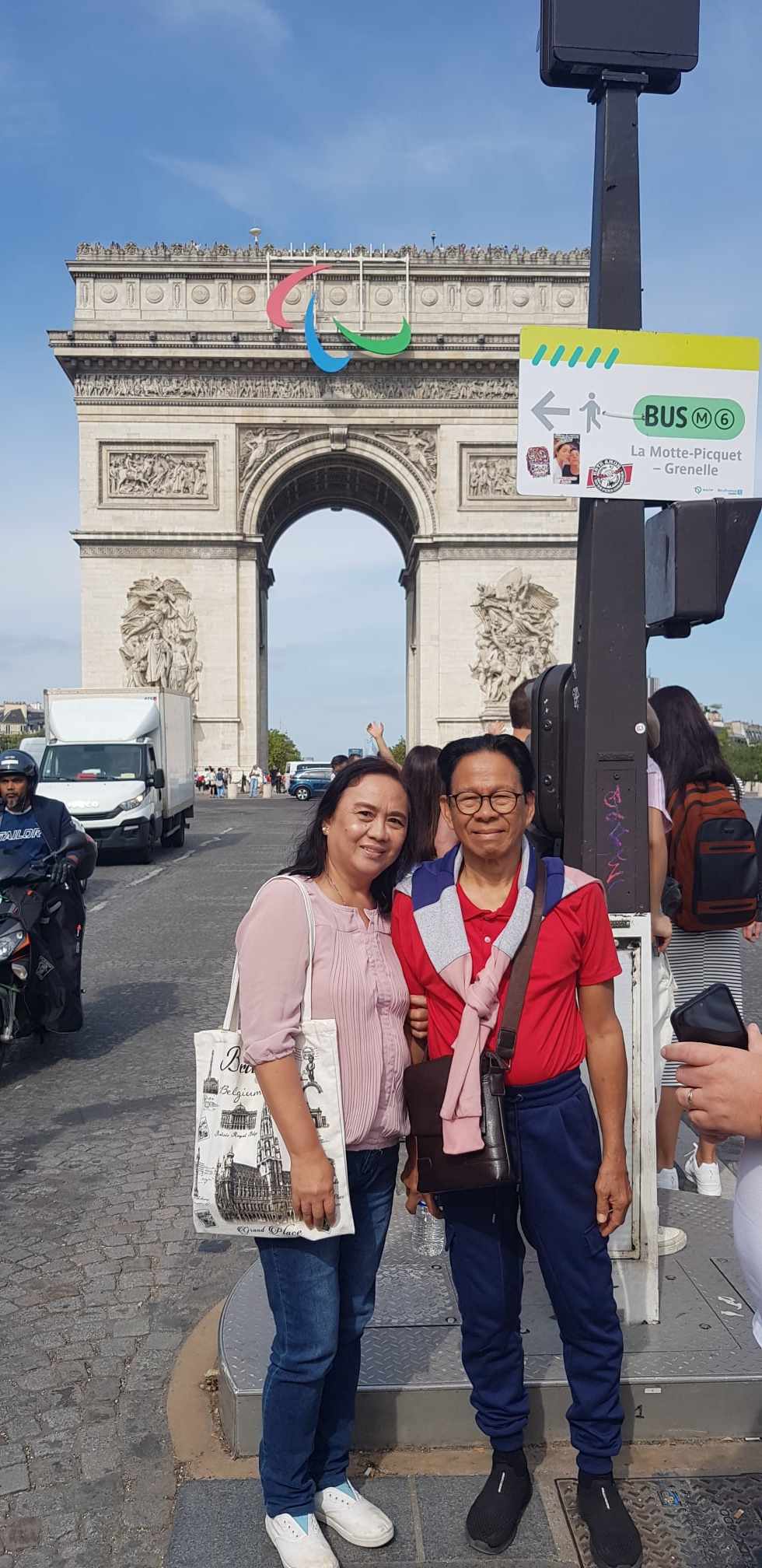
As we turned the corner onto the Champ de Mars, the grand public park unfurling before us like an emerald carpet, we were filled with anticipation. Suddenly, we stopped in our tracks. There it was. Mario quickly raised his Samsung to capture the moment, and I couldn’t help but stand in awe. Rising above the skyline like a guardian of dreams was the Eiffel Tower, a lattice-worked masterpiece that seemed to defy gravity and expectation.

Seeing the Eiffel Tower for the first time is an experience that cannot be adequately described without invoking a sense of enchantment. For years, I had admired its image on postcards and travel books, but those pale in comparison to reality. The Tower stood majestic against a backdrop of pale blue, with wisps of white clouds painting the sky. It was both massive and delicate, a paradox of iron that seemed to make perfect sense in the heart of this city known for its light and romance.

As we drew closer, I couldn’t help but marvel at the Tower’s engineering brilliance. As a civil engineer myself, I found the structure fascinating. Each step brought me nearer to the intricate details – the crisscross of beams, the artful symmetry amidst the seeming chaos of metal, and the way the sunlight cast playful shadows that danced upon the ground. It was as if the Tower was alive, each beam pulsing like a vein in a century. I stood in awe of its strength and elegance, a perfect marriage of art and science.

“Raymond and Cherrie, stay right there. Don’t move. Look at me. Perfect.”

Mario’s directions were as precise as they were persistent. Merlita, Cher, and I posed now and then at the strategic spots he chose around the base of the Eiffel Tower. After an hour of capturing our presence against this iconic backdrop, we decided to head home. Or so we thought.

We soon realized we had a problem. None of us could recall exactly where Mario had parked his SUV. All we had was a screenshot of a restaurant named Casa Luca, which was adjacent to the entrance of an elevator leading to the fourth level of an underground parking garage. Worse, there were three Casa Luca in the area. Armed with this scant information, we began our search.

Mario, who had driven to Paris several times before, took the lead. He walked block after  block, street after street, yet the elusive parking spot remained hidden. Asking a local waiter yielded no results, and even a woman who tried to help by Googling the location couldn’t pinpoint it.

After some negotiation, Mario secured a cab, and we were finally on our way. The driver expertly navigated the narrow Parisian streets, and within minutes, we arrived. The fare? A hefty 50 euros, but worth every cent to resolve our confusion. In my college production management class, we called this the “value of perfect information” – a fitting term for the price we paid to find our way back after over two hours of search.

Yet, this unexpected detour didn’t mar our spirits. It added an adventurous twist to our day. Driving back, I couldn’t help but reflect on the unforeseen joys of our trip. The smooth ride on the six-lane highways leading in and out of Paris was a thrill in itself. Back home in the Philippines, my Toyota Vios never had the luxury of such expansive roads; the fastest I could push it safely was 100 kph, limited by the short stretches of decent highway.

Here, Mario comfortably cruised at 130 kph with his 14-year-old Chevrolet Captiva, yet we were still being overtaken by faster cars zooming past us. Mario offered me the wheel several times, tempting me with the thrill of driving on these magnificent roads. But, aware of Cher’s apprehension about my speed-loving nature, I reluctantly declined.

The French highways impressed me with their organization and drivers’ discipline. Trucks, restricted on weekends, stuck to the rightmost lane at a maximum speed of 90 kph, while most cars occupied the middle lanes, leaving the left lane for those in a hurry. Nearer to Paris, a special lane was reserved for emergencies, police, and taxis – a testament to the city’s thoughtful infrastructure planning.

I was equally impressed by the Aires de service, or service areas, strategically placed along the highways. These stops offered a variety of amenities – fuel stations, restaurants, cafes, restrooms, and even showers. Some even featured picnic spots with tables and chairs, perfect for travelers looking to relax and refresh. For senior travelers with history of prostate issues, the conveniences, especially the toilets, were more than just welcome, they were essential.

By the time we finally returned home, tired but exhilarated, Merlita and Cher couldn’t help but laugh as they suggested a fitting title for this adventure: Lost in Paris. And indeed, we were – lost in the city’s charm, in its surprises, and in its lessons on the joy of wandering.


Content and editing put together in collaboration with ChatGPT
Head collage photos courtesy of Plex, Simon & Schuster, IMDb, FlipHTML5, Behance, CineMuseFilms, RollerNews, & BookFrom

Thursday, 29 August 2024

BELGIUM'S SECRETS: GENT, BLANKENBERGE, & A SAVED CHURCH


Gent BELGIUM

August 26

As we strolled through the beautifully preserved cobblestone streets of Gent, Mario turned to me with a smile and said, “This is the city where my two daughters went to school.” I could hear the pride in his voice as he spoke of Sofia, now a teacher, and Lisa, a corporate manager, both of whom had completed their schooling in this enchanting place.

Gent, with its blend of old-world charm and modern vibrancy, felt like a city where time had graciously decided to stand still. The historic buildings and charming boutiques whispered stories of a bygone era, making me feel like I had stepped into a hidden gem – Belgium’s best-kept secret.

As we settled into a cafĂ© in the university district, I reminisced about my college years. Sipping on a steaming cup of coffee, I watched the lively groups of students treading down the streets. At a nearby table, a trio caught my eye: a father, mother, and their kid, all sipping drinks and sharing quiet laughter. Mario guessed they were probably visiting their kid’s school, exploring the familiar hangouts.

The sight of them sparked a memory of my kids when they were still in school, years ago – an era that seemed both distant and yet, at moments like this, strikingly close.

Blankenberge

August 27

“Today, we go to the sea,” Mario announced with a twinkle in his eye. I couldn’t help but chuckle at the idea, considering our home in the Philippines is just a stone’s throw from the beach – a view that I wake up to every day. Yet, as we arrived in Blankenberge, I realized this wasn’t just any ordinary seaside.

Blankenberge sparkled like a jewel along Belgium’s coast, its sun-drenched sands and lively promenade offering a fresh perspective on a beachside escape. The colorful beach huts, the elegant pier extending into the sea, and the energetic ambiance created a vibrant tableau that was more than just picturesque – it was invigorating. We strolled along the famous beach promenade, taking in the sights and sounds of this lively town, where history and modernity blend seamlessly along the breathtaking North Sea.

By lunchtime, our senses were ready to explore the local culinary scene. Mario, ever the thoughtful host, took charge of ordering and soon enough, our table was laden with 80-euro plates of Videe vol-au-vent, a delightful Belgian specialty featuring a puff pastry filled with tender chicken, meatballs, mushrooms in a creamy hollandaise sauce, accompanied by French fries and fresh vegetables. And of course, there was Belgian beer for me.

Rewinding a few hours, Mario had prepared a hearty Belgian breakfast at home that left me feeling satisfyingly full. Now, faced with this generous lunch, I found myself in a unique predicament – a feasting dilemma in a foreign land. (Social situations like this, I would always recall Mario's whimsical guilt-ridden prompting: "Remember the poor in the Philippines, Raymond." Ouch.)

How could I convey my appreciation for this delicious spread without offending our hosts by leaving too much on my plate?

The solution, I decided, lay in strategy. First, I ate all the vegetables, then half the French fries, followed by a careful portion of the Videe vol-au-vent. Finally, I polished off the beer, figuring that it would be wiser to disappoint the Indian restaurateur than to offend any Belgian beer enthusiast.

Merlita, Cher, and I all ended up with similarly half-eaten plates. I noticed the Indian waiters casting curious glances our way, and before long, they discreetly whisked away our dishes, perhaps to spare us from the perceived embarrassment of unfinished meals.

In the end, it felt like a win-win situation. We had savored the best of Belgian cuisine without overstaying our welcome at the table. A small victory, perhaps, but one that added another layer to our rich tapestry of experience in this beautiful country.

August 28

Flashback: The Saved Church

“As we drove home, wandering through the picturesque towns of Belgium, we caught sight of a striking scene – a dilapidated Catholic church. Its once-majestic walls stood bare, stripped of their roof, open to the sky like a hollow shell of its former self. Weeds crept through the cracks in the stone, and the wind whispered through the broken windows, carrying with it an eerie silence that spoke volumes.

This scene, both sad and haunting, felt like more than just the inevitable decay of an old building; it felt like a powerful symbol, a poignant reflection of the broader secularization sweeping across not only Belgium but much of the western world.” (Excerpted from ATABAY’s A Tale Of Two Images: The Atomium & The Ruined Church)

“[M]ario shared an extraordinary tale about a local Catholic Church slated for demolition. ‘My wealthy friend Phillip bought the church because his devout Catholic mother wanted to preserve it,’ Mario explained.

“Now privately owned, the church has become an adoration sanctuary without a Mass or priest, open to visitors from nine in the morning until six in the evening, maintained weekly by hired caretakers.” (Excerpted from ATABAY’s Exploring Faith In Belgium: A Farmhouse Story)

This afternoon, we had the rare privilege of meeting Phillip, the man who purchased the dilapidated, empty church and spared it from demolition. We owe this remarkable opportunity to Mario, whose earnest efforts made this meeting possible and who also captured our photos with Phillip in front of the beautifully restored Catholic Church.

It’s an intriguing reversal of roles: rather than the church saving a man, in this instance, it was a man who saved the church – at a cost of 1.2 million euros (77.2 million pesos).

Content and editing put together in collaboration with ChatGPT

Head collage photos courtesy of iStock and Wikipedia


MANUFACTURED INEVITABILITY: THE DIRTY SCIENCE OF PHILIPPINE ELECTION SURVEYS

Welcome to the theater of the absurd, where 2,400 people decide the destiny of 118 million. A survey showing Vice President Sara Duterte lea...