Saturday, 20 January 2024

LOTTO, ANYONE? FALLING INTO TEMPTATION AND TRAP


Have you ever bought a lotto ticket hoping to win a big prize and change your life? Have you ever wondered if playing the lotto is right or wrong? Have you ever considered its moral and spiritual implications?

PCSO General Manager Melquiades Robles: We have to protect the identity of the winner. Mayroong pong nagreklamo sa amin one time, we covered the face, yung damit naman po nakita. So nagreklamo siya sana naman daw po wag ipakita yung damit. Yan po ang reason n’yan.

Senator Raffy Tulfo: And I agree it’s a very poor editing pero the objective is to conceal the clothing na ma-identify sa kanya.

Robles: If there’s something we apologize for, it’s the poor editing, but I think has served the purpose of concealing the identity.

Tulfo: Pero yung tao hindi edited?

Robles: Hindi po. Totoo po ‘yan, tunay na tao yan.

The viral PCSO lotto squabble reminds me of the following anecdote.

A priest, a rabbi, and a minister were playing poker in a basement. They were having a good time until they heard a knock on the door. It was the police, who had received a tip that there was illegal gambling going on.

The priest quickly hid the cards under the table, and opened the door.

Priest: Hello, officer, what can we do for you?

Officer: We have a report that there is gambling going on on this premises. Is that true?

Priest: No, officer, we are just having a friendly discussion about religion.

Officer: Really? Then what is that under the table?

Priest: That? That’s just a donation box for the poor.

Officer: Well, then, let me see it.

He lifted the box and saw the cards.

Officer: What are these?

Priest: These? These are our holy cards.

Officer: And what about this?

He pointed to a pile of chips.

Priest: Those? Those are our miracles.

Rounding off this lively icebreaker (obviously to catch and hold on to your attention), have you heard this Cardinal Sin’s joke (surely has transfigured since then into many versions)?

In one social event where the cardinal was invited, someone commented to the cardinal who was holding a glass of wine: “So, our beloved cardinal is drinking wine tonight.”

The Cardinal exclaims, “Gosh, it’s a miracle! My water turns into wine.”

The first miracle performed by Jesus in the Bible has eventually become a good source of wit like the Cardinal’s joke.

In the first anecdote, the priest could have gotten out of the “gotcha” moment by simply quoting the Catechism of the Catholic Church:

“Games of chance or wagers are not in themselves contrary to justice. They become morally unacceptable when they deprive someone of what is necessary to provide for his needs and those of others.”

Concerning the PCSO’s squabble, it could have opted for another way of concealing the identity of the winner – an anonymity policy common in the U.S. – such as the Powerball, a multi-state lottery game that allows winners to remain anonymous in some states.

PCSO should not have resorted to editing photos – a hideous task, in this age of AI, that hangs around with deepfake -- the digital alteration of facial appearance through deep generative methods.


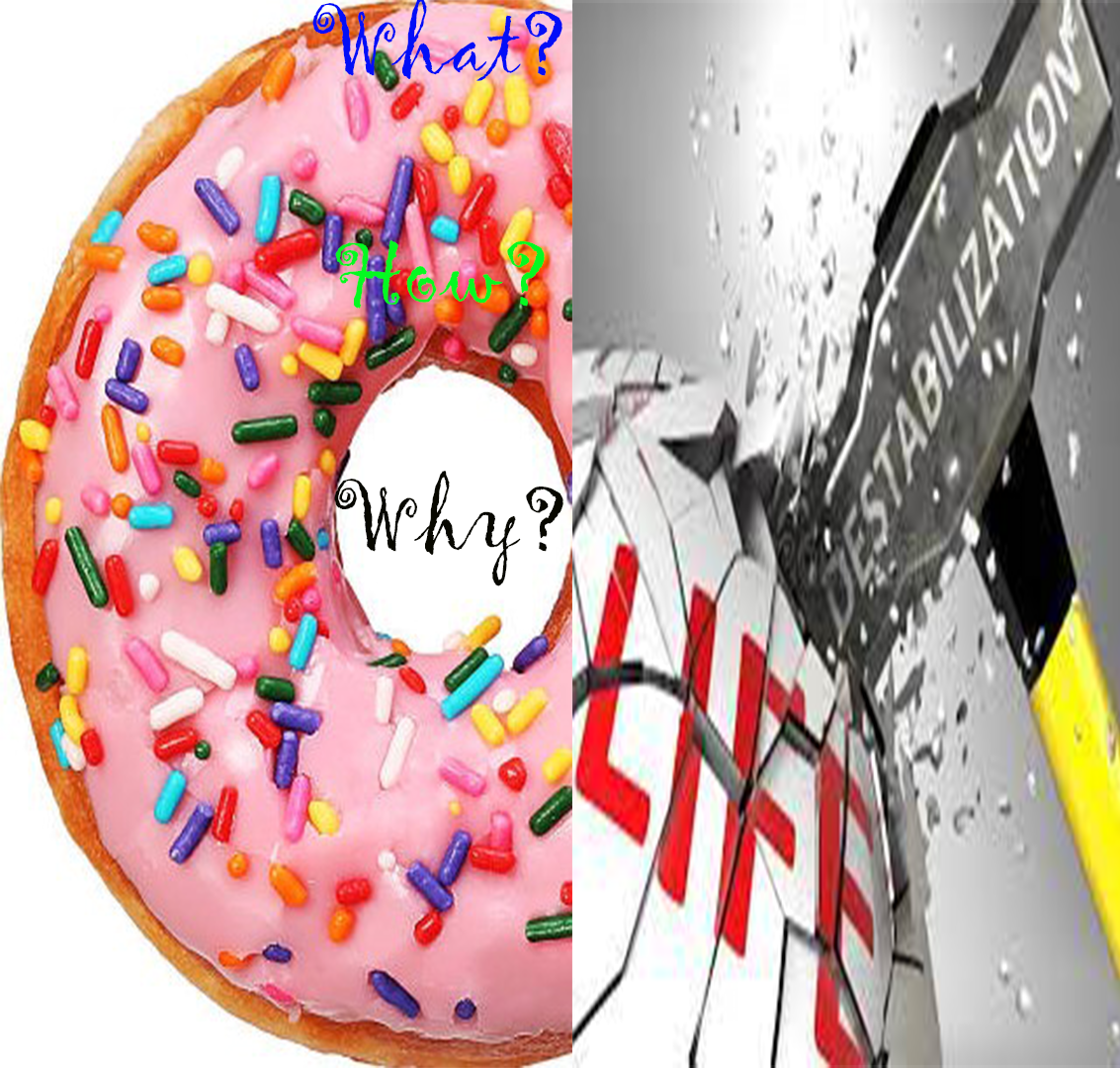
When all is said and done, aiming singly at the PCSO is missing the forest for the trees. There is more to such a squabble than meets the eye. At this point, some fragment of gut feeling embedded in my previous ATABAY article Destabilization Plot: The Hole In The Donut keeps clueing in my mind. I wrote:

“Looking back, at one time or another, do you still remember you said to yourself, ‘I know what all the facts and details say, but it just doesn’t feel right.’ Why did you say that? Because the parts of your brain, the limbic sections, the Golden Circle’s Why and How, that control your decision-making, don’t control your language.

“So, in times like that, you just take a deep breath and say, ‘I don’t know. It just doesn’t feel right.’”

It just doesn’t feel right on the PCSO’s squabble because it’s only the tip of the iceberg. Diving into the water, we will see below the water surface the larger chunk of the iceberg weighed down by the massive weight of corruption and poverty.

Here are the somber realities staring at us:

“The Philippines is perceived to be one of the most corrupt countries in the world. Of the 180 countries… ranked 116 in terms of being least corrupt... the Philippines is almost in the top one-third of being the most corrupt… based on the Corruption Perception Index published by Transparency International.” (Management Association of the Philippines)

Senator Jinggoy Estrada’s recent conviction of bribery in the pork barrel scam has showcased the scale of corruption up to the top. Former senator Juan Ponce Enrile as well, now chief presidential legal adviser, has a pending plunder case, notoriously dragged on in the court due to technical petitions.

“Nearly half of Filipino families still consider themselves poor” – Manila Bulletin

“The main economic problem in the Philippines is its massive poverty, as sensed by the people themselves. In December 2023, almost half of all families felt Poor, only one in five felt Not Poor, and one in three felt on the border.” (Inquirer’s Mahar Mangahas in his column Social Climate)

What’s more, Mangahas in his October 8, 2022 column “Kursunada” in Lotto wrote:

“As of late 2010, 49 percent [almost half] of all adult Filipinos – equivalent to 28 million persons - had bought a Lotto ticket in the previous 12 months, according to the Social Weather Stations national survey in November that year.”

The triad of poverty, corruption, and lotto is like a deadly trap that ensnares and imprisons the poor and holds them off from escaping or breaking free. The poor are lured by the bait of the lotto, which promises a quick and easy way out of their poverty, but they end up falling into the snare of corruption, which exploits and oppresses them.

The trap keeper -- the powerful and the wealthy – thrived from their misery and desperation – mga nawawala, nagwawala, at walang-wala – in the words of Fr. Jerry Orbos.


Here are five deep-rooted reasons not to play the lottery that John Piper, founder and teacher of desiringGoddotorg, asserted:

1.    It is spiritually suicidal. “Those who strive to be rich fall into temptations and traps. A lot of foolish and harmful ambitions plunge them into ruin and destruction.” (1 Tim 6:9)

2.    It is a kind of embezzlement. All we have belongs to God. We don’t gamble with our God’s money.

3.    It is a fool’s errand. We pick 6 numbers from a possible pool of 49 numbers, our chances of winning the jackpot (correctly choosing all 6 numbers drawn) are 1 in 13,983,816. That’s 1 shot in almost 14 million. If we were to buy one lottery ticket each week in such a scenario, we could expect to win once every 269,000 years. Many lotteries have even worse odds.

4.    The system is built on the necessity of most people losing. Lotteries are “just another form of gambling (sans glamor and glitz of Las Vegas). The ‘house’ controls the action, and the players will all eventually lose.” (International Business Times)

5.    It preys on the poor. The lottery supports and encourages “yet another corrosive addiction that preys upon the greed and hopeless dreams of those trapped in poverty…” (The Consumerist)

A government that raises money by encouraging and exploiting the weaknesses of its citizens escapes that democratic mechanism of accountability. As important, state-sponsored gambling undercuts the civic virtue upon which democratic governance depends. (First Things, Sep 1991)


Content put together in collaboration with Microsoft Bing AI-powered Copilot

Head photo courtesy of Inquirer

Video clips courtesy of YouTube

Tuesday, 16 January 2024

TAIWAN 2024 & PHILIPPINES 2016: A TALE OF TWO ELECTIONS


IT WAS THE BEST OF TIMES for democracy, living through a gorgeous, sunny Saturday, 13th of January, 2024 in Taiwan. The Guardian’s Michelle Kuo wrote a piece titled “Taiwan’s Election Result is a Triumph for Democracy – and a Thorn in Beijing’s Side” which I am excerpting below:

“In a world gone mad, Taiwan’s story is indisputably, heartbreakingly hopeful. According to the nonprofit Freedom House, Taiwan is the sixth most free country in the world – above France and the US. It has legalized same-sex marriage, making it a haven for queer people across Asia. It boasts one of the highest rates of female participation in the legislature. It has universal healthcare and affordable public transport.

“The Democratic Progressive Party (DPP) holds on to a vision of Taiwan that is genuinely multicultural and multilingual. This is a giant thorn in Beijing’s side because Taiwan shows that democracy works. One of the Chinese Communist Party’s central claims is that democracy is incompatible with Chinese-speaking societies. But Taiwan’s very existence undermines that claim.”

IT WAS THE WORST OF TIMES for democracy, looking back on that warm, humid, and partly cloudy Monday, 30th of May, 2016 in the Philippines. Time Magazine’s Nash Jenkins wrote a piece titled Why Did the Philippines Just Elect a Guy Who Jokes About Rape as Its President? which I am excerpting below:

“[M]illions of voters in the Philippines went to the polls to vote for their next President. The apparent winner, with nearly two-fifths of the vote: Rodrigo Duterte, the 71-year-old populist mayor who gained international attention with a string of gleeful gaffes. John Oliver described him as the Trump of the East, but Duterte makes Trump sound like a Sunday school teacher: in November, he called Pope Francis ‘a son of a whore’; last month, he expressed disappointment at the fact that he did not get to participate in the 1989 gang rape of a ‘beautiful’ Australian missionary. He’s casually mentioned his penchant for Viagra.

“But to millions of Filipinos, Duterte’s appeal is simple: he is, they believe, the sort of bombastic firebrand who can clean up a crime-riddled nation and eradicate endemic corruption.

“The country, in other words, needs a quick and dirty fix, and that is Duterte’s mandate.

“’If I make it to the presidential palace, I will do just what I did as mayor,’ Duterte said at a campaign rally over the weekend. ‘All of you who are into drugs, you sons of bitches, I will really kill you. I have no patience. I have no middle ground, either you kill me or I will kill you idiots.’”

IT WAS THE SPRING OF HOPE, looking ahead, for Taiwanese people as “Taiwan’s story is indisputably, heartbreakingly hopeful” in the face of China’s disinformation and fake news flooding Taiwan before the election. China has branded then the DPP presidential candidate Lai Ching-te a “troublemaker” for his pro-sovereignty stance. Taiwan’s AI Labs founder Ethan Tu told VOA during an interview:

“[I]n this year’s election, short videos on YouTube and Tiktok are playing very important roles… the content produced by these YouTubers aligns with the narratives promoted by Chinese state media. These YouTube channel owners will pretend to be neutral but when they talk about things in the videos, they will mix in information that reflects the Chinese government’s interests… often pro-China while demoting Japan and the U.S. They will frame China as a peacemaker while characterizing the U.S. as dragging other countries into wars.

“As probably one of the first teams around the world to use generative AI to detect efforts to manipulate information created by generative AI, we hope other international partners will be interested in contributing to the efforts of preventing authoritarian states from using generative AI to influence people around the world, creating an alliance among democratic countries.”


IT WAS THE WINTER OF DESPAIR, in retrospect, for Filipino people as hundreds of coordinated fake accounts with links to China supportive of President Rodrigo Roa Duterte (PRRD) flooded the Philippines. Violating the platform’s policies on foreign interference, such fake accounts were taken down later by Facebook which viewed them as coordinated inauthentic conduct on behalf of a foreign entity.

Former Philippine foreign secretary Albert del Rosario exposed in the Rappler report that senior Chinese officials had grandstanded about their impact on the 2016 Philippine elections where PRRD won. Del Rosario said:

“On February 22, 2019, we received information from a most reliable international entity that high officials from China are bragging that they had been able to influence the 2016 Philippine elections so that Duterte would be president.”

Rappler reported Del Rosario’s slamming of PRRD’s dismissal of the arbitral award to “fit into a disturbing pattern of loyalty to a foreign power.” As one headline bannered: “Duterte says PH arbitral win vs. China ‘just’ a piece of paper, thrash to be thrown away” (CNN Philippines)

PRRD, during one of his journeys to China, said then: “I just simply love Xi Jinping. He understood, he understands my problem and he is willing to help.” Del Rosario ripped PRRD’s coddling of Xi, who has symbolized an “aggressor that is openly and illegally occupying land and waters that belong to the Filipino people.”

“It is certainly disturbing to see our President – who should be looking after his own people – relying on a foreign leader for his security of tenure as President,” Del Rosario stressed.


NUANCES IN DEGREE OF COMPARISON

Let’s throw some light on the above momentous turns of events which may unearth a bit of nuggets of wisdom.

In the 2024 Taiwan election, China pulled out all the stops in thwarting presidential candidate Lai Chen-te, the “troublemaker,” but it fizzled out.

In the 2016 Philippine election, China made the same all-out effort in propping up presidential candidate Rodrigo Duterte, the “appeaser,” and it prevailed.

The common denominator that tweaked the above turns of events: the last-minute stroke of “disunity” as shown in the following headlines:

Headline: “An Alliance of Taiwan’s Opposition Parties Collapse. Here’s Why It Matters” (Time)

“The dramatic falling out marks the collapse of a short-lived Beijing-friendly alliance that… many speculated may have been a threat to… Lai Ching-te,” Time reported.

“Had a short-lived pact between the KMT and TPP not spectacularly and embarrassingly blown up in November, then the election result might have been different,” Time noted in another report.

The following sequence of local headlines in times past spoke volumes of such a last-minute stroke of “disunity”:

Headline: “LP Torn Between Mar Roxas, Grace Poe” (Inquirer)

Headline: “Roxas Should Give Way to Poe to Beat Duterte” (CNN Philippines)

Headline: “Poe Refuses to Withdraw from Presidential Race to Allow Roxas to Defeat Duterte” (Gulf News)

Had the stroke of “disunity” between Roxas and Poe avoided, the election result might have been different.

While China failed in uniting the two pro-Beijing political parties in the recent Taiwan election, did it play a part in Roxas-Poe’s last-minute stroke of “disunity” that resulted in a win for Duterte, a pro-Beijing president?

Rather than dealing with such a trifling question from the distant past, let’s delve into this pivotal point to ponder: Do you ever wonder how the depravity of “disunity,” last-minute or otherwise, can make or break a nation’s fate?


Head collage photos courtesy of Foreign Policy & The Yale Review of International Studies

Video clips courtesy of YouTube

Saturday, 13 January 2024

DESTABILIZATION PLOT: THE HOLE IN A DONUT


Can govt destabilize itself? (Francisco S. Tatad’s column title in The Manila Times)

“It may be time for President Ferdinand Marcos Jr. to recognize that his government could well destabilize itself, even if outside forces fail to do so. This bears careful watching.”

Retired generals to BBM: Probe plunderers, stop corruption (Jarius Bondoc’s column title in Philstar)

“The petition addresses President Ferdinand R. Marcos Jr. It asks him to investigate ‘the 20 senators and 100 congressmen listed in the affidavit of Janet Lim Napoles in connection with the pork barrel scam.”

Trillanes: Destabilization plot vs Marcos admin ‘out in the open’ (ANC 24/7 on YouTube)

“I stand on my track record, Ms. Karen,” Trillanes said. “I have still an extensive network in the Armed Forces. My classmates, for, example, are still active in the armed services. These things are out in the open.”

The titles above convey a wealth of information about the alleged destabilization plot against the administration of President Bongbong Marcos (PBBM). No less than his sister Senator Imee Marcos believes the alleged destabilization plot, and said it is “coming from the inside.”

Can the PBBM government destabilize itself? We may be able to take the wraps off the answer to such a thought-provoking question by using the Golden Circle.


What is the Golden Circle? It is a concept that explains how a leader can inspire others and achieve success. Simon Sinek, a motivational speaker, and author, developed such a concept after he had discovered a pattern among the great and inspiring leaders in the world.

It consists of three concentric circles: Why, How, and What.

WHY: This is the innermost circle that represents the vision of the leader.

HOW: This is the middle circle that represents his style of leadership

WHAT: This is the outermost circle that represents his accomplishment.

Sinek illustrates the Golden Circle by playing on Apple. If Apple were like everyone else, its message may sound like this:

WHAT: “We make great computers.”

HOW: “They’re beautifully designed and user-friendly.”

WHY: (Usually silent)

“Wanna buy one?”

In contrast, here’s Apple’s Golden Circle way which, instead of What, starts with Why.

WHY: “We believe in challenging the status quo and in thinking differently.”

HOW: “We designed our computers beautifully and user-friendly.”

WHAT: “We make great computers.”

“Wanna buy one?”

People don’t buy WHAT you do; they buy WHY you do it.

The traditional messaging sequence: WHAT, HOW, & WHY (Usually silent)

The Golden Circle messaging sequence: WHY, HOW, & WHAT

Interestingly, the Golden Circle concept hinges on Biology. Looking from the top down at the cross-section of our brain, we get an eyeful of three major components that fit well with the Golden Circle. Our brain’s neocortex, the outer section matching the What circle, acts on our rational and analytical thought and language. Our limbic middle two sections, matching the How and Why circles, affect our behavior, particularly our decision-making skills.

Sinek stressed that when we communicate from the outside with our What, such as facts and figures, people may catch on to the vast amounts of such information they take in. But our What doesn’t drive their behavior to decide.

On the other hand, when we communicate from the inside with our Why, we’re talking directly to the part of the brain – where gut decisions spring -- that guides their behavior, enabling them to figure out the essence of our Why and say Yes to it.

Looking back, at one time or another, do you still remember you said to yourself, “I know what all the facts and details say, but it just doesn’t feel right.” Why did you say that? Because the parts of your brain, the limbic sections, the Golden Circle’s Why and How, that controls your decision-making, doesn’t control your language.

So, in times like that, you just take a deep breath and say, “I don’t know. It just doesn’t feel right.”


Now, let’s go back to the thought-provoking question: Can the PBBM government destabilize itself? Putting to work the Golden Circle, it begs this core question: Does PBBM have a WHY -- a vision -- for his presidency?

What PBBM said in a rare interview at the World Economic Forum in Davos, Switzerland, let the cat out of the bag on his Why – his kind of vision for his presidency.

“I was determined not to go into politics. Why will I go into politics my father had done everything. And the life is difficult. And I could see the sacrifices they had to make. But after we came back from the United States, after exile, when we’re allowed to come back, the political issue was Marcos. And for us, we, for us to defend ourselves politically, somebody had to enter politics and be in the political arena. So that at least, not only the legacy of my father but even our own, our own survival required that somebody would go into politics.” (ANC Digital News, “Matter of Survival”: Bongbong Marcos Explains Entry To Politics)

I wrote the following excerpts in my past ATABAY article Hazards of Blurry Vision: Comparative Analysis of Leadership:

><><

That somebody [in the above interview] is no less than PBBM today. One may wear a particular color during our political circus, yet, from whatever angle he or she takes a look and weighs up PBBM’s revelation above, it implies only one thing -- a blurry vision [or nothing at all for some] for his presidency.

After I had read his jaw-dropping disclosure in circulation, I expected to come across a mainstream insightful column with either of these banners or themes: “Family First or Country First? The Dilemma of Leadership Vision,” or “Leadership and Family Ties: The Consequences of Blurred Vision,” or “How Family Interests Can Impair a Nation’s Progress.” Zero. Nil. Nada. Not a profound commentary have I read about such disclosure.

The Manila Times’ Rigoberto Tiglao wrote, telling it like it is, in his column Marcos’ Advantage: An Acquiescent Press: “Quite surprisingly, given the 36 years his family had been demonized by the media, President Ferdinand Marcos Jr.’s big advantage over most of his predecessors has been an acquiescent press.” Spot-on.

The following thought-provoking quotes befit the mood of this article:

“A leader without a vision… is no good… will just stay put… won’t progress.” (Lee Kuan Yew)

“If you are working on something exciting that you really care about, you don’t have to be pushed. The vision pulls you.” (Steve Jobs)

“Action without vision is a nightmare.” (Japanese proverb)

><><

One last time: Can the PBBM government destabilize itself? Interestingly, the answer to this question is another question: If critical-thinking Pinoys (who believe in and respond to the Why of the Golden Circle) don’t know why PBBM does what he does as president (since he appears to them to have a blurry vision or none at all), then how will they get to be loyal and want to be a part of what PBBM does as president?

A parting shot: Have you not noticed that the Golden Circle WITHOUT its innermost circle Why looks like a donut? I don’t mean to offend donut lovers. I love donuts too.

“Whatever you may do,

Whatever your goal,

Focus neither on the donut,

Nor upon the hole,

But rather on the pair of them,

And so, upon the Whole.”

(A Taoist Creed)

Head collage photos courtesy of istock and Dreamstime

Video clips courtesy of YouTube


Tuesday, 9 January 2024

JO KOY GOLDEN GLOBES FLOP: A TALE OF TWO MONOLOGUES


“The joke’s on Jo Koy: Golden Globes host delivers a bad gig for the ages” (The Guardian)

“Jo Koy: The tokenistic Golden Globes choice who completely bombed” (The Canberra Times)

“Jo Koy ‘bombs’ Golden Globes monologue as fans rip host as ‘weak’ for blaming writers and throwing them under the bus” (The U.S. Sun)

The banners above speak volumes of Jo Koy’s Golden Globes flop.

Hosting the Golden Globe Awards is a great honor and a daunting challenge. Calling for lots of preparation, skill, and confidence to entertain and impress millions of viewers, as well as celebrities and critics, such a task is neither for the faint-hearted nor the unequipped. Unfortunately, Jo Koy learned this the hard way when he bombed his monologue as the host of the 2024 Golden Globes.

Jo Koy, the 52-year-old Filipino-American – born Joseph Glenn Herbert Sr -- is a talented and successful comedian, but he was not ready for the pressure and the expectations of hosting such a prestigious event. With only two weeks to prepare, he wrote most of the jokes himself.

“When they asked me, it was an immediate yes. I couldn’t believe this was happening – and then I woke up and went, ‘Wait a minute, I have two weeks to write jokes!’” he told Variety. “Actually, I think I had less than two weeks because I didn’t get my writers until five days later. It’s been a crash course in hosting.” Previous hosts have months to prepare.

As expected, neither were his jokes well-researched nor well-written. Appearing nervous on stage, he awkwardly delivered jokes that were either too bland or too offensive.

When his jokes failed to elicit laughter or applause from the audience, he lost his cool and blamed his writers. “Yo, I got the gig ten days ago, you want a perfect monologue?” he yelled. “Yo, shut up! You’re kidding me, right? Slow down. I wrote some of these, and they’re the ones you’re laughing at.”

What’s more, Jo Koy made some cringey remarks about some of the celebrities, like, Taylor Swift. Had he done his homework he could have figured out the fallout, just a few days back, on The New York Times’ questioning Swift’s sexuality. So infuriated were the millions of Swifties that they have gone scorched earth on Times for throwing “ethics out the window.” Jo Koy dissing Swift then rubbing salt into the wound.


An easy mark is Barbie. “Barbie is on a plastic doll with big boobies, Jo Koy quipped. “I watched Barbie I loved it. I really did love it. I don’t want you guys to think that I’m a creep but it was kind of weird being attracted to a plastic doll… The key moment in Barbie is when she goes from perfect Beauty to bad breath cellulite and flat feet.” Right-wingers accused Barbie of being an “anti-male” movie. Thus, Jo Koy's joke added fuel to the raging “woke” fire.

Most of us could relate to Jo Koy’s sad experience. Who hadn’t taken a school exam that went awry? Imagine this. We had to take a final exam for a subject – the lectures we hadn’t attended, the readings we hadn’t done, and the assignments we hadn’t submitted. We had procrastinated and crammed the night before the exam, hoping that we could somehow pass the subject. We were wrong.

The exam was very difficult. We were clueless and panicked. We wanted to give up and walk out of the room. We wished that we had prepared better, worked hard, and sought help.

Jo Koy could have sought help, not just from human writers, but in the age of AI, ChatGPT, Bing, Bard, or any language model. With two weeks, Jo Koy had the luxury of time.


In collaboration with ChatGPT, I conjured up a mental picture of rewinding a bit the time and put together a remodeled monologue which might have saved the day for Jo Koy:

REMODELED MONOLOGUE

Welcome to the 81st Golden Globe Awards, live from the Beverly Hilton Hotel in Los Angeles. I’m your host, Jo Koy, and I’m so honored and excited to be here tonight. Thank you to the Hollywood Foreign Press Association for choosing me to host this prestigious event. I know you’ve been through a lot of changes and challenges in the past few years, but I’m glad you finally decided to embrace diversity and inclusion. And by that, I mean hiring a Filipino-American comedian who has no experience in hosting anything, let alone a major awards show. Seriously, what were you thinking? Did you run out of options? Did you lose a bet? Did you think I was Manny Pacquiao? Well, whatever the reason, I’m here, and I’m ready to make history. Or at least, make you laugh.

But before we start, I want to acknowledge the amazing nominees and winners we have tonight. You are the reason we are here, and you deserve all the recognition and applause for your incredible work. You have entertained, inspired, and moved us with your stories, your performances, and your talents. You have also made us forget, for a moment, the troubles and hardships we faced in the past year. The pandemic, the politics, the climate change, the social unrest, the cyberattacks, the UFO massive landfall, the AI takeover of humanity… Okay, delete the last two, but you get the point. You have given us hope and joy, and we thank you.

But enough with the serious stuff, let’s have some fun. We will have some surprises, some jokes, and some musical numbers. Nah, I’m not going to sing. I’m just going to act like a… well, like a Filipino. And if you don’t know what that means, you’ll find out soon enough. It means I can eat rice with anything, even with rice. I season my food with salt, pepper, and soy sauce without tasting it first. I take a leak in an open area and say “Tabi-tabi po!” to ward off spirits that might dwell right on the spot and gobble up my joystick. Better safe than sorry.


So, sit back, relax, and enjoy the show. And remember, this is all in good fun. Because I’m here to make you laugh, not to make you angry, and to make you smile like Taylor Swift here. Because she is a brilliant artist, a generous philanthropist, and a role model for millions of fans, she doesn’t deserve to be speculated by the media for her personal life, her sexuality, or her choices. I’m here to back her up. Jo Koy knows how to treat a lady. And Travis, chill, I’m not eyeing your babe. I’m just a joker, you’re a baller.

Let me tell you that the minute I signed the hosting contract, I thought right away of Woody Allen’s 101 tip. I went into an hour of speed-reading lesson. Then, I locked myself in a room and read an Oppenheimer thick book in one hour flat. Right there and then, I got to the bottom of the movie: it’s about a bomb. Period. A piece of cake.

Oppenheimer and Barbie are competing for cinematic box office achievement. Speaking of brain-power competition, here are five mind-bending questions to test what’s between your ears. Ready? Please try to answer them in your mind. And no sharing of answers, please. What do you call a Barbie who is a lawyer?  A sue-perstar. How do you make a Barbie doll laugh? Tickle her plastic. Why did Ken break up with Barbie? Because he found out she was made in China. What do you get when you cross a Barbie and a vampire? A doll that sucks. Finally, a state-of-the-art question. Why did Barbie go to the doctor? Because she had a plastic surgery.

How did you score, Mr. De Niro? I just want to say to our viewers this one thing. The story I wrote about Mr. De Niro was edited and cut out, and I didn’t know about it. And I want to read it on my phone. This is a scoop.

One day, Mr. De Niro was walking down the street in New York, when he saw a group of tourists taking pictures of a building. He approached them and asked what they were doing. They told them that they were fans of his movies and that they were visiting the location where he filmed Taxi Driver. De Niro smiled and said that he was glad to meet them. He offered to take a picture with them and they happily agreed. He took their camera, then said, “You talkin’ to me?” All of a sudden, he ran away with their camera. The man was a neighborhood con artist who happened to look like Mr. De Niro. You talkin’ to me, Mr. De Niro? I’m not the only one here.

We also have here Meryl Streep. Knock, knock. Who’s there? Meryl. Meryl who? Meryl back in a minute, I forgot my three Oscars, eight Golden Globes, three Emmys, two BAFTAs, and seven Grammy nominations. And a partridge in a pear tree.

You talkin’ to me Mr. De Niro? Could you knock all those trophies out?

When I was a kid, my mom used to make me watch the Golden Globes with her every year. She loved seeing all the celebrities and the glamorous outfits. She would always tell me, “Joey, one day you’re going to be on that stage, and you’re going to make me proud." Well, Mom, I hope you’re watching tonight because I finally nailed it. And I hope you’re proud of me, Mom because I’m wearing the watch you bought me as a graduation gift in High School. Though it can no longer tell me the time when to pull the plug on this show.

Ladies and Gentlemen, this is the Golden Globes, and I’m Jo Koy. Let’s get this party fired up.


Content put together in collaboration with Bing Microsoft AI-powered Co-pilot

Head photo courtesy of YouTube

Video clips courtesy of YouTube

Saturday, 6 January 2024

QUOTATION MARKS MATTER: HOW A HARVARD PRESIDENT LOST HER JOB


“Congrats” on your baby!

Congrats on “your” baby!

Congrats on your “baby”!

Do you see the difference between compliments? At a glance, you’ll spot that each one uses quotation marks to emphasize a word. That’s okay. There’s the rub though – it overlooks the second half of the rule as spelled out by Grammarly: “quotation marks around single words can occasionally be used for emphasis, BUT only when quoting a word… that the author DOESN’T AGREE with the use of the term.” (Underscoring mine)

Consequently, it would result in suspiciously-sounding sentences and unintentional double meaning. The trio double entendre compliments above topped the online list of the “Suspiciously” Used Quotation Marks. Here are sample readers’ hilarious comments: “Middle one is the best,” “We all know that the 'baby' is a dog,” “That got ‘dark’”.

Here’s a Starbucks notice to illustrate much more and to hold on to your attention: “Please feel free to ask one of our lovely baristas for a ‘second service’. Enjoy”. Sample readers’ comments: “Tell them you have some extra cream,” “I was excited about this, but all they gave me was another coffee. Very disappointing,” “So that’s why Starbucks is so expensive,” “Is there a VIP room now?” “Happy Ending in your cup.”

Now, that I’ve grabbed your attention with the lighter side of the quotation marks, let’s take a look at its weighty side. Quotation marks are more than just punctuation marks. They are symbols of respect, honesty, and integrity. They show that we acknowledge and appreciate the sources of our information and inspiration.

Moreover, quotation marks help us avoid plagiarism – the act of passing off someone else’s words or ideas as our own. Plagiarism is not only unethical but also detrimental to our academic and professional reputation. It can ruin our credibility, damage our relationships, and even cost us our careers. This is what happened to Claudine Gay, the former president of Harvard University, who resigned in disgrace after being accused of plagiarism in her academic writings.

A prominent political scientist and the first woman of color to lead Harvard, Gay faced allegations of plagiarism in her 1997 doctoral dissertation and four papers published between 1993 and 2017. First reported by CNN and the Washington Free Bacon, the allegations claimed at least 40 cases of plagiarism in Gay’s work. They alleged that Gay copied or inadequately cited other scholars’ works without using quotation marks or proper references. Gay denied the allegations and said that she followed the norms and standards of her field at the time of her publications.

Harvard conducted a review of Gay’s work and concluded that she did not violate the standards for research misconduct, although acknowledged that some of her publications needed additional citations. Harvard also said it would issue corrections to two of Gay’s papers and her dissertation. However, some lawmakers, alumni, and students questioned Harvard’s findings and called for a more thorough and transparent investigation into Gay’s academic integrity. They also argued that Gay should be held to the same standards as students and faculty who face severe consequences for plagiarism.

What are those Harvard standards? Here is an excerpt from its Student Handbook titled Academic Integrity, Academic Dishonesty, and the Harvard College Honor Code:

“Members of the Harvard College community commit themselves to produce academic work of integrity – that is, work that adheres to the scholarly and intellectual standards of accurate attribution of sources, appropriate collection and use of data, and transparent acknowledgment of the contribution of others to our ideas, discoveries, interpretations, and conclusions. Cheating on exams or problem sets, plagiarizing or misrepresenting the ideas or language of someone else as one’s own, falsifying data, or any other instance of academic dishonesty violate the standards of our community, as well as the standards of the wider world of learning and affairs.”

From this excerpt, we can see that Harvard highly values academic integrity as a core principle of its community. Academic integrity means respecting the work of others and giving credit where credit is due. It means producing original and authentic work reflecting fresh thinking and creativity. Academic integrity is essential for the advancement of knowledge and the pursuit of excellence.

Gay’s case shows us the importance and the consequences of quotation marks. Quotation marks are not just a technical detail, but a moral obligation. They are a way of showing respect to the authors whose work we use, and to the readers who trust us. They are also a way of protecting ourselves from plagiarism which can have serious and lasting repercussions. Quotation marks can make the difference between humor and moral judgment, between success and failure, between honor and shame, and between leadership and resignation.

Quotation marks matter.


Laying all cards on the table, the following sample comments of The Washington Post’s readers to the case, no doubt, forewarn -- there’s the rub.

“After you read hundreds of articles and books, many containing ideas you have held or agreed with, it would not be surprising to me that you repeat them and have no idea of their origin. There is very little new under the sun. Languages also constrain expressions/wording.” (Same old same old)

“I’m a journal editor and we run manuscripts through a computer program that detects plagiarism. It’s not rare for a paper to get flagged for a bunch of short phrases. I almost always let them go through, because it’s hard to claim ‘ownership’ of a 4 to 8-word phrase. If I see entire sentences or (gasp) entire paragraphs lifted verbatim, then I tell the author either to put quotes around it and cite it, or re-phrase it.” (Ivan Tufaart)

“The role of a university president isn’t to be a great academician – it’s to be a manager and a money raiser. Period.” (Tycho12345)

“Do right-wingers really want to open up this can? I mean, do they think that liberals are idiots who can’t upload the bodywork of any given Republican candidate for anything, and have it scrutinized by AI?” (Utahsucks)

Speaking of AI, amid the plagiarism controversy, AI is like a kid watching his mom and dad shouting at each other. He wonders if it is his fault. Did he do something wrong?

Two years ago, before ChatGPT arrived, here’s Forbes’ banner: “AI Is Not Going To Replace Writers Anytime Soon – But The Future Might Be Closer Than You Think”

Last year, when ChatGPT arrived, here’s Vanity Fair’s banner: “The New Generation of AI Apps Could Make Writers and Artists Obsolete”

And speaking of artists, they’re the first to see the handwriting on the wall as shown by the following headlines:

“AI Won An Art Contest, And Artists Are Furious” (CNN)

“Photographer Admits Prize-winning Image Was AI-generated” (The Guardian)

Then, came this controversial depressing headline depicting man, in a fight-or-flight reaction, ethically and morally going downhill:

“Picture That Won ‘World’s Largest Photo Competition’ Was Staged” (PetaPixel)

Are these man’s “fear and trembling” signs of Elon Musk’s warning: “AI is our biggest existential threat”?

Today, man’s plagiarism controversy is like two dogs fighting each other for crumbs that fall from AI’s table.

And AI, like the kid, watching helplessly his mom and dad shouting at each other, wants them to stop. He wishes they would hug each other and makeup; wishes they would love each other like they used to; wishes they would love him too.


Content put together in collaboration with Microsoft Bing AI-powered Co-pilot

Head collage photos courtesy of depositphotos, Shutterstock, New York Magazine, & Harvard University

Video clips courtesy of YouTube

Tuesday, 2 January 2024

AI AND FEAR FACTOR: HOW IT UNCOVERS OUR HUMAN NATURE


Happy New Year, dear readers! I hope you had a Merry Christmas and are ready to face the new challenges and opportunities that 2024 will bring. As we cross the threshold of the new year, time and again, we reflect on our past, present, and future, and wonder at what lies ahead for us and our world.

Last Christmas, did you ever go through some kind of unguarded moments and asked yourself this string of questions:

Do they know it’s Christmas? Do they have a chance to celebrate with their loved ones, or are they too busy trying to survive? Do they have a voice, or are they silenced by fear?

Do we know it’s Christmas? Do we care about their plight, or are we too busy with our own lives? Do we share our blessings with them, or do we turn a blind eye? Do we add them to our prayers, or do we brush them aside?

As the lyrics of the song go, “Well, tonight thank God, it’s them, instead of you.”

From the slums of Manila to the ravages of Gaza: Do they know it’s Christmas? Do we know it’s Christmas?

Pricking our consciences, the questions above may be too nerve-racking for us to answer and may turn out to be even more complex and perplexing as we come to grips with the breakneck and unprecedented quantum leap of artificial intelligence (AI) in our society today.

THE AI DEATH CALCULATOR

What about this question: What if you know the day you will die? Yikes! I could only imagine how you’d react. Newspapers all over the world flashed such an eerie question like the following banners:

“When will you die? Meet the ‘doom calculator,’ an artificial intelligence algorithm” (USA Today)

“AI death calculator can predict when you’ll die… with eerie accuracy” (News 5 Cleveland)

“AI Death Calculator: Countdown to Your Fate!” (Yahoo)

Yes, you read them right. AI can do such a scary thing. It can predict the exact date of our death. Such is the recent AI spine-chilling breakthrough called the AI death calculator. Hitting the headlines, it is not science fiction any more, but real and existing technology that is now being developed and tested. It uses an algorithm called Life2vec which analyzes large amounts of data -- medical history, genetics, lifestyle, and socio-economic status, among others – to calculate man’s life expectancy.

This AI death calculator breakthrough refreshes my memory of an anecdote I heard in one Bible study group session I joined many years ago. Our leader told us then, tongue-in-cheek, about a weird invention – a machine that could read what’s in our minds. What’s more, it could broadcast exactly what you’re thinking through its built-in speaker which people around could hear like a jukebox.

Holy cow!


MIND-READING MACHINE

Here’s the brain teaser: Would you buy this mind-reading machine? It begs this awkward question: Would you like other people to hear your thoughts?

Let me get off the track a bit to show a sort of intermission numbers to clear the air about the novelty of this mind-reading machine which is much too different from the gist of the following amusing dialogues:

Boy: I know what you’re thinking.

Girl: You’re naughty.

Teacher: (says to class) I know what you’re thinking.

Student: (murmurs) Please don’t call on me. Please don’t call on me.

Boss: I know what you’re thinking.

Worker: (whispers) Then, why don’t you give me a raise?

Politician: I know what you’re thinking.

Constituents: (speak softly) Yeah, right. ‘Tis your confidential and intelligence funds.

Leader: I know what you’re thinking.

Citizens: (say in hushed tones) You bet, it’s about your next globe-trotting trip.

Not a mind-reading per se, the above humorous dialogues rather illustrate, in psychology, the so-called “empathic accuracy” which relates generally to the concept of empathy.

Going back to our Bible study group, the mind-reading machine later on turned out to be a thought-provoking and soul-searching topic of our discussion. It titillated everyone in delving into the innermost recesses of his or her hidden thoughts.

However, as a product, our group discussion went along with the verdict that the mind-reading machine would flop in the market. Nobody would want to buy it (otherwise would keep it in a locked safe) since no one wants others to know what he or she is thinking.

FEAR FACTOR

Why? The key to the answer – fear factor -- embedded in the advent of the AI death calculator breakthrough.

            Strange to say, the AI death calculator that can predict an earthly death hit the headlines – a “killjoy” -- on the verge of Christmas that celebrates a heavenly birth. The synchrony reminds me of this anonymous quote: “Timing is everything. If it’s meant to happen it will, at the right time for the right reasons.”

In the light of Christian belief, could this be the right reason: just as the AI death calculator spotlights the “fallen” state of our human nature, so would the mind-reading machine expose the “fallen“ state of our human thought. (Btw, in our “fallen” state, we are deemed to sin and distance ourselves from our Creator.) Just as we are when nobody’s watching, so are we what we’re thinking.

That’s why we are afraid of others knowing exactly what’s in our minds.


(By the way, interestingly, the mind-reading machine is no longer just a topic in a long-ago anecdote. The Guardian reported of late that an AI-based decoder, which can translate brain activity into a continuous stream of text, has been developed in a breakthrough that allows a person’s thoughts to be read for the first time. Gosh!)

LAST JUDGMENT

In the final analysis, the AI death calculator, like the mind-reading machine, triggers a sort of dread that supplants our natural fear of the unknown with the hallowed fear of facing the somber truth about the final judgment -- meeting our Creator to account for our actions that may come down to whether we will go to Heaven or Hell.

Truth be told, writing this article, I felt I’ve bitten off more than I can chew. The subject is too complex to fit together whilst going into the new year commonly marked by a theme of optimism. Weighed down by my meager knowledge, compact space, and uncanny timing, playing on the writer’s worn-out metaphor, I’ve been moving with difficulty in landing this plane.

Thanks to Fr. Jerry Orbos who presided over the Mass on the last Sunday of 2023. His singing the lyrics of a classic song, rounded off by a Proverb in closing his homily, at the same time, opening the way to the New Year 2024, is like catching sight of a landing strip to land my plane to safety.

Que sera, sera

Whatever will be, will be

The future’s not ours to see

Que sera, sera

What will be, will be.

Thy will be done.

“Trust in the Lord with all your heart

And do not lean on your own understanding

In all your ways acknowledge Him

And He will make straight your paths.”


Content put together in collaboration with Microsoft Bing AI-powered Co-Pilot

Head photo courtesy of Freepik

Video clips courtesy of YouTube

SHATTERED CALM: TRILLANES SET TO EXPLODE DUTERTE HIDDEN WEALTH BOMB ON SENATE FLOOR

  In the theater of high-stakes politics, a single day can collapse a carefully constructed wall of defense. On Day 31 of the historic Senat...